
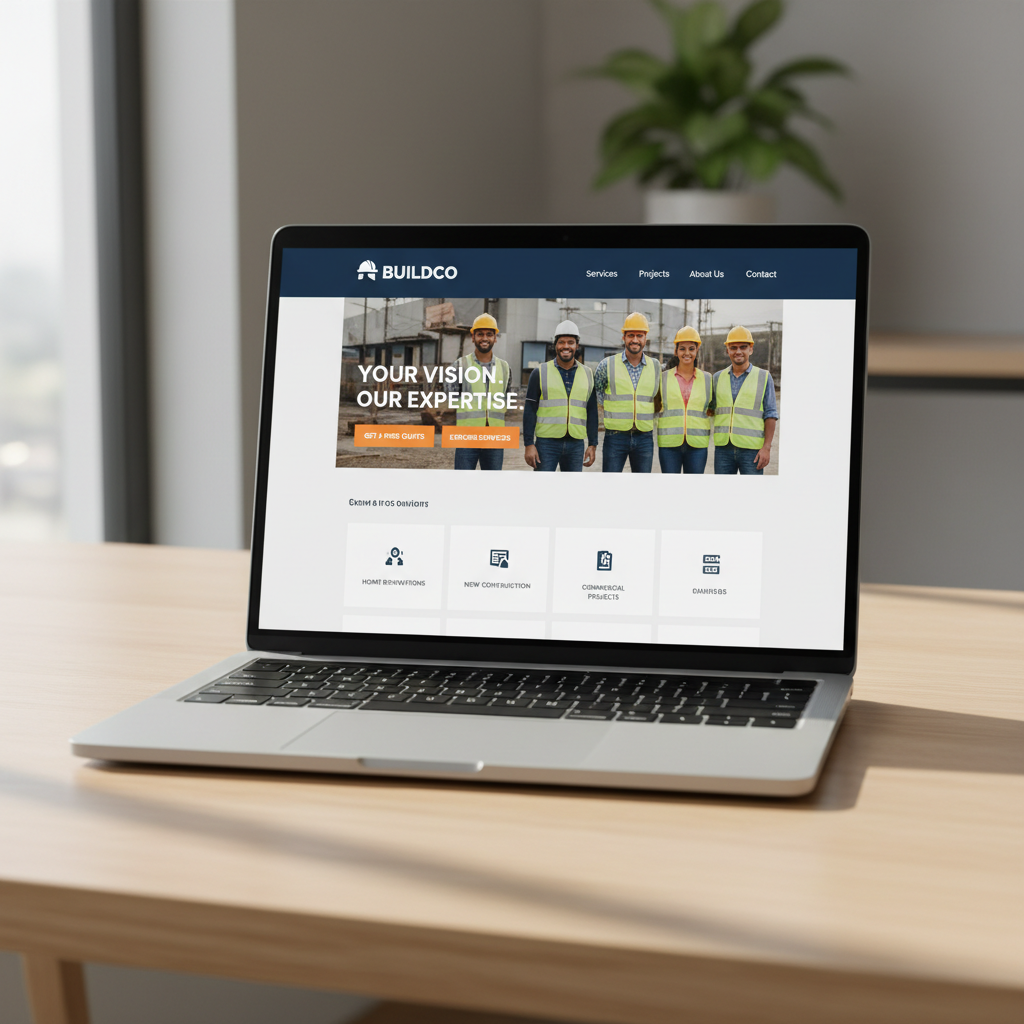
Professional contractor website design turns Google searches into phone calls, not just clicks. By pairing smart SEO with high-converting elements like click-to-call buttons, prominent phone numbers, real project photos, and customer reviews across every service page, a contractor site closes the gap between a search result and a ringing phone.
Most contractors invest in SEO and still watch potential clients bounce before the job is won. You might rank on page one of Google, but if your site looks dated or makes calling hard, homeowners move on to your competitor. That gap between being found and being hired costs real revenue every month. In this guide, we walk through the essential features of high-performing contractor website design, from mobile-first layouts and local service pages to trust signals and call-to-action placement, so your site turns more searches into booked calls.
The Disconnect Between Being Found and Being Hired
Many contractors experience a specific frustration: they open Google Search Console to see healthy traffic numbers, yet the office phone remains silent. This disconnect usually stems from a website designed as a digital brochure rather than a lead generation tool. A brochure site lists services and shows a logo, but it fails to guide a homeowner toward a specific action. In the home services industry, a website must act as the bridge between a homeowner’s immediate problem and your professional solution.
Effective contractor website design prioritizes the psychology of the local user. Research indicates that 78 percent of home service leads come through phone calls, which close at a rate 10 to 15 times higher than form fills. If your site does not facilitate an immediate connection, those visitors will bounce to a competitor who makes the process easier. At North & Co. Digital, we view a website as a high-performing engine tailored to how people think during an emergency repair or a high-stakes renovation. You can see how we bridge this gap by viewing our construction website portfolio. Moving beyond a digital business card requires a strategic layout that addresses trust and speed simultaneously. To understand the investment required for this shift, you can review our contractor website pricing or get a custom web design quote to start building a site that actually converts your existing traffic into scheduled jobs.
Why Mobile First Design is Mandatory for Local Contractors

The most significant factor in converting traffic is recognizing that 60 percent of home service inquiries now originate from a mobile device. When a homeowner is standing in a flooded basement or looking at a fallen tree limb, they are not booting up a desktop computer; they are searching on a smartphone. Effective contractor website design must prioritize a 'thumb-friendly' philosophy, ensuring that every vital piece of information is accessible with a single hand.
Generic responsive templates often fail because they merely shrink a desktop layout to fit a smaller screen. This frequently results in the phone number being buried inside a collapsed menu or hidden at the bottom of a long page. In contrast, specialized mobile design utilizes a sticky call button. This is a persistent element that remains at the bottom or top of the screen as the user scrolls. Data shows that implementing a sticky mobile call button can increase call volume by over 20 percent. It eliminates the friction of searching for contact details, allowing the user to connect with your office the moment they feel ready to hire.
Beyond user experience, mobile performance is a critical ranking factor. Google now utilizes mobile-first indexing, meaning the search engine primarily uses the mobile version of your content for indexing and ranking. If your mobile site is slow or difficult to navigate, your visibility in local search results will suffer regardless of how well the desktop version performs. Viewing a professional construction website portfolio demonstrates how high-performance sites balance heavy visual elements, like project galleries, with the lightweight code necessary for instant mobile loading. This technical precision ensures your business remains visible and accessible at the exact moment a local property owner needs your expertise.
The Psychology of Trust: Features that Encourage Property Owners to Call
Once a visitor finds your site on their mobile device, their subconscious immediately begins looking for reasons to trust you. In the home services industry, you are asking property owners to invite strangers into their homes or onto their job sites. High performance contractor website design leverages specific trust signals to lower this psychological barrier and turn a skeptic into a caller.
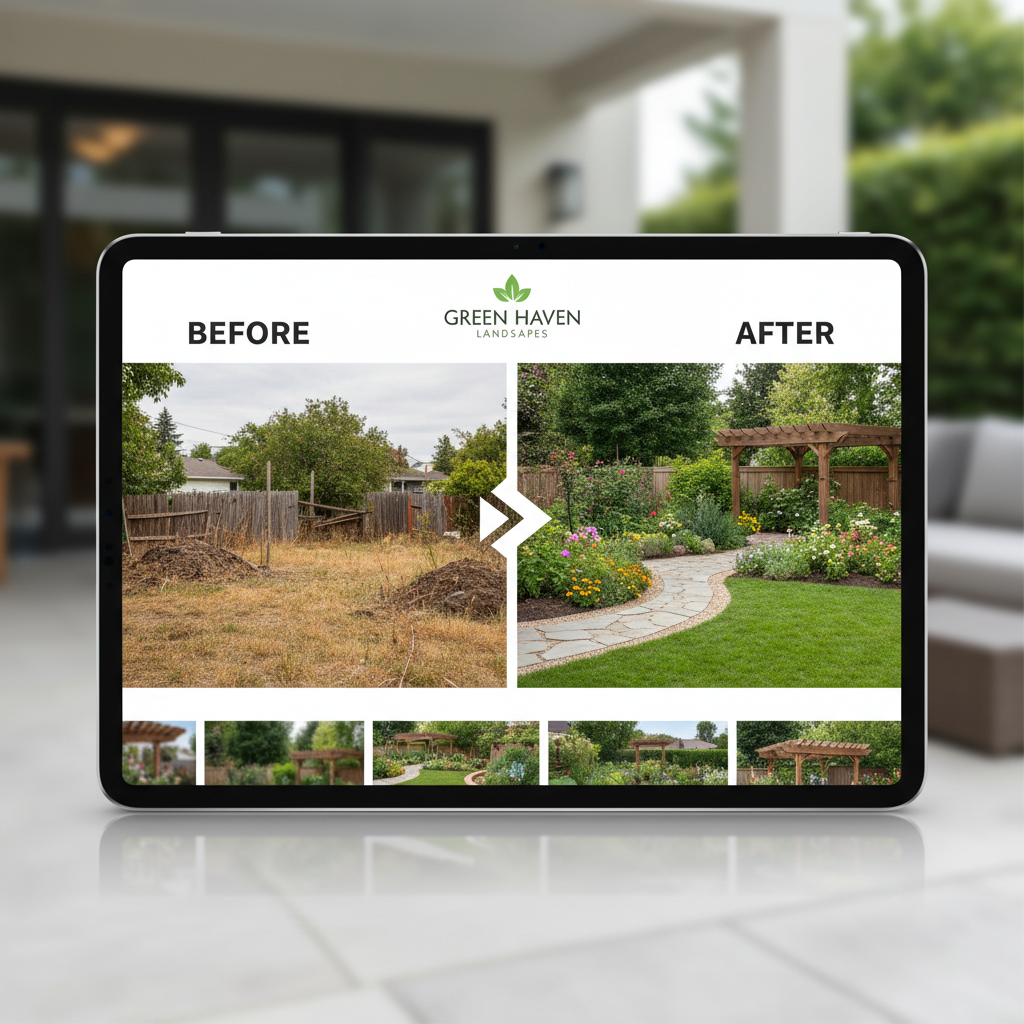
Visual evidence is the most powerful tool for building authority. While stock photography is easy to source, it often creates a sense of detachment. Property owners want to see your actual crew, your branded trucks, and the real quality of your craftsmanship. Authentic before and after photos act as a non-verbal case study, proving you can handle the specific challenges their project presents. You can see examples of how these galleries are structured for maximum impact by browsing our construction website portfolio.
Beyond visual proof, your website must verify your professional legitimacy through credentials. Displaying your contractor license number and insurance status in the footer or on a dedicated page is not just a legal requirement; it is a conversion tool. Furthermore, displaying professional affiliations such as the Better Business Bureau (BBB) or the National Association of the Remodeling Industry (NARI) provides instant third-party validation. These logos signal that you are an established professional who adheres to industry standards.
Strategic placement of social proof is equally vital. Rather than hiding reviews on a buried testimonial page, place your highest rated Google or Yelp reviews directly adjacent to your call to action buttons. This reduces friction at the exact moment a user is deciding whether to pick up the phone. When a homeowner sees a five star review right next to a button that says "Call for a Quote," the perceived risk of the interaction drops significantly. This careful arrangement of trust elements is a hallmark of premium design. To see how these features integrate into a full project, you can review our contractor website pricing or get a custom web design quote to begin building your own digital authority.
Converting Local Intent: Using City Pages and Service Areas
Establishing authority through trust signals is only effective if your business appears in the right local searches. When a property owner types a phrase like "contractor website design los angeles" or "kitchen remodeler near me," they are expressing high intent to hire locally. To capture this traffic, your site must transition from a general overview to a localized strategy using dedicated service area pages.
Generic sites often list zip codes in a footer, but high-performing designs create individual pages for key neighborhoods or cities. These pages should include custom maps of your service boundaries and localized content that references regional home styles, such as Spanish Colonial architecture or mid-century modern renovations. Mentioning local landmarks or specific municipal building codes demonstrates that you are an active part of the community, not just a distant corporation. This localized relevance turns a generic search into a direct inquiry because the homeowner feels you are already familiar with their specific area.
You can see how these localized elements are integrated into a functional layout by reviewing our construction website portfolio. By aligning your content with local search signals, you ensure your business is the immediate answer when a neighbor searches for help. If you are ready to map out your digital footprint, you can get a custom web design quote to start targeting your specific service areas and capturing high-intent leads.
Technical Performance and the Three Second Rule
Even a perfectly localized service page fails if the user never sees it. Technical performance is the invisible foundation of effective contractor website design. Industry data confirms that over half of mobile visitors will abandon a site if the page takes longer than three seconds to load. In an industry driven by urgent needs, such as a burst pipe or a leaking roof, a slow site acts as a leaky bucket for leads. Prospective clients will not wait for a heavy layout to resolve; they will simply hit the back button and click on the next competitor in the search results.
Most DIY site builders and generic templates are burdened with bloat, which refers to unnecessary code, redundant scripts, and heavy plugins that drag down performance. At North & Co. Digital, we utilize custom coding to ensure a lean architecture that prioritizes speed. This is particularly vital when managing a construction website portfolio. While high-resolution project photos are essential for building trust, they can cripple load times if not properly optimized. We use advanced image compression and lazy-loading techniques to ensure your craftsmanship looks sharp without sacrificing site velocity. High performance directly correlates to call volume because it removes the technical friction between a problem and a solution. To see how these technical standards fit into your budget, you can review our contractor website pricing or get a custom web design quote to start building a faster, more reliable lead source.
Strategic Call to Action Placement: Above the Fold and Beyond
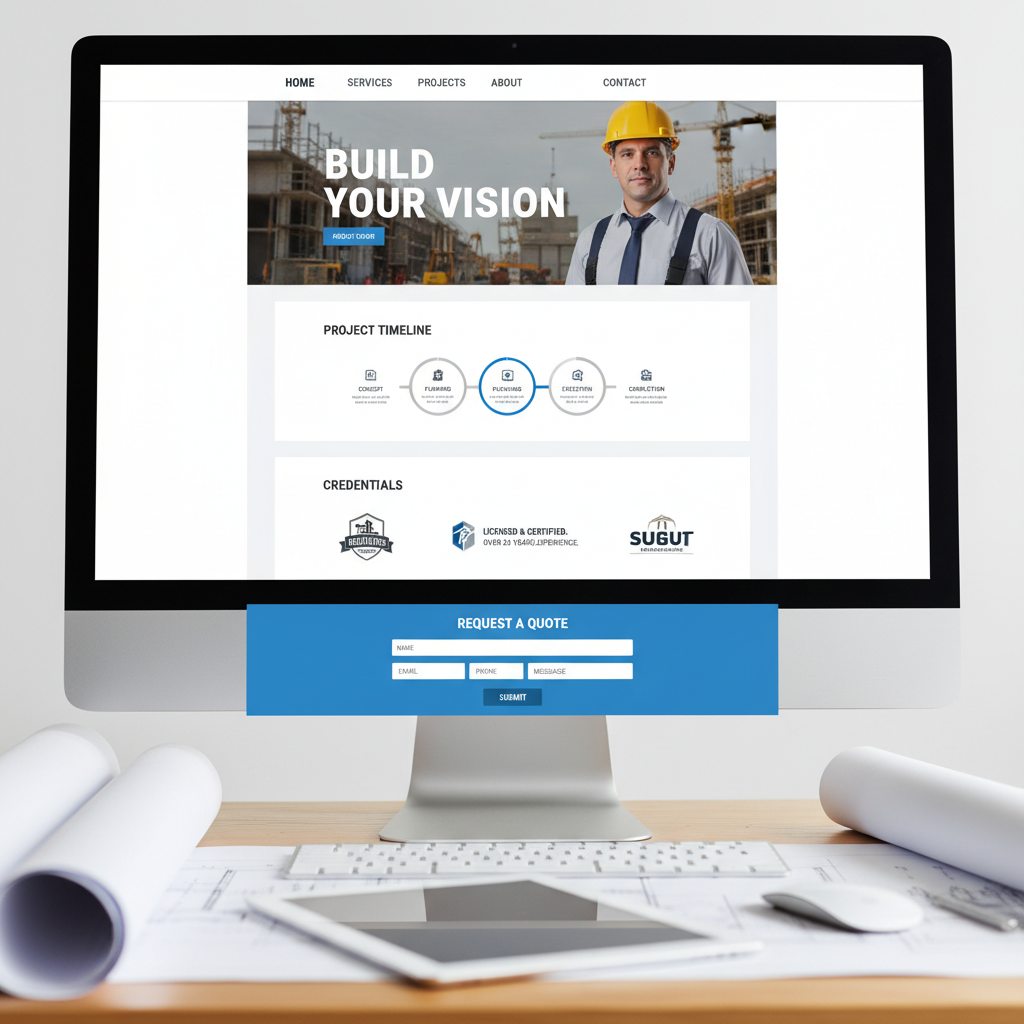
Even the fastest loading site will fail if the visitor has to search for a way to hire you. Strategic contractor website design treats the Call to Action (CTA) as the final destination of a user's visual journey. To maximize lead generation, your primary contact method must be inescapable. Your phone number should be anchored in the top right header, embedded in the center of the hero section, and repeated in the footer of every single page. This redundant placement ensures that no matter where a property owner stops scrolling, the next step in the process is obvious.
While the phone number is the primary driver, high performing sites also utilize micro-conversions. These are smaller actions, such as a short estimate request form, intended for visitors who are still in the research phase and are not yet ready for a live conversation. This is a critical secondary goal because, while form fills account for a smaller percentage of total leads, they still capture prospects who would otherwise bounce. However, data confirms that phone calls close at a rate 10 to 15 times higher than form fills. By providing both a prominent direct call option and a low friction form, you capture the widest possible net of potential clients without sacrificing your highest quality leads.
The language used on these buttons is just as important as their placement. Passive words like "Submit" or "Send" create a psychological dead end. Instead, use active, benefit-driven language such as "Get Your Free Quote," "Claim Your Inspection," or "Start My Project." This small shift in phrasing clarifies exactly what the user receives in exchange for their information. To see how we balance primary CTAs with micro-conversions in real world applications, you can explore our construction website portfolio. If you are looking for a layout specifically engineered to convert, you can get a custom web design quote to see how these strategies can be applied to your specific business model.
Frequently Asked Questions About Professional Contractor Web Design
How much does professional contractor website design cost?
The cost of a professional site is best measured by its return on investment. While a cheap template might save money upfront, a site engineered for lead generation pays for itself by capturing the high-value phone calls that close at significantly higher rates than generic form fills. You can explore contractor website pricing to see how we structure our builds.
What is the best website builder for a construction company?
Many DIY platforms struggle with the code bloat that slows down mobile sites and hurts search rankings. Professional contractor website design ensures your site meets the critical three second load rule through custom, lean architecture. Hiring a niche agency like North & Co. Digital means your construction website portfolio is backed by industry-specific data rather than generic design trends. To move from a static brochure to a high-performing lead engine, get a custom web design quote.
